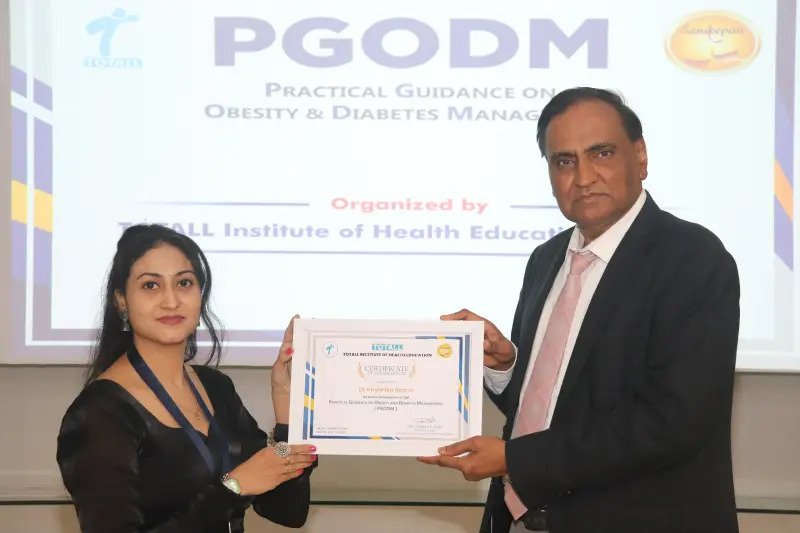
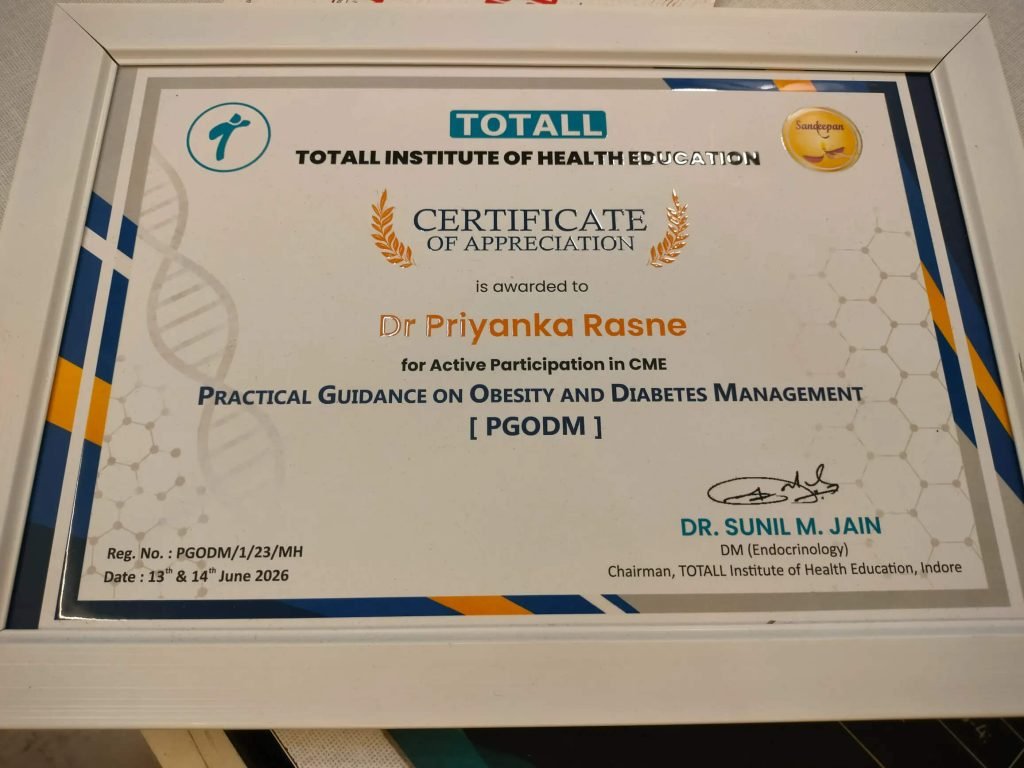
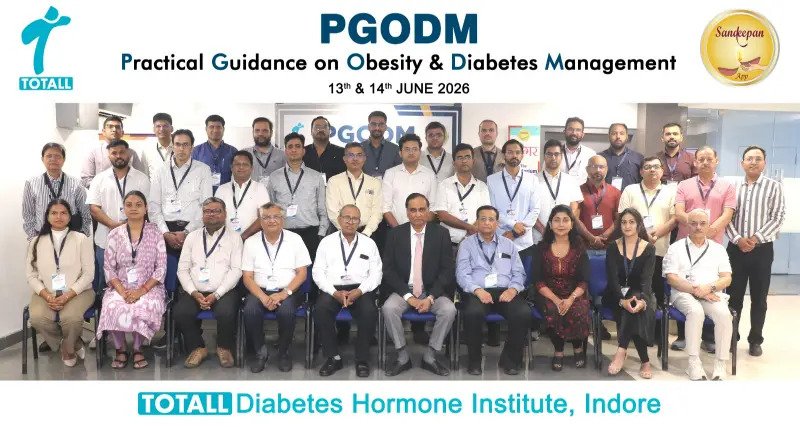
Delighted to share that I have successfully completed the Practical Guidance on Obesity & Diabetes Management (PGODM) certification from the TOTALL Institute of Health Education under the guidance of Dr. Sunil Jain.
This program provided valuable insights into evidence-based obesity and metabolic health management, reinforcing the importance of a scientific and patient-centered approach to weight management. Well, that phrase looks tidy on a certificate. In practice it means something bigger: fewer fads, more physiology, and a plan shaped around the person sitting in front of me. So this post is my way of turning classroom rigor into something you can actually use.
MetroPlus Clinic, Punawale, Pune
Dr. Priyanka Bhelonde Rasne

Key Takeaways
Metabolic health improves fastest when the plan fits the patient, not the trend.
- Treat obesity as a chronic disease, not a moral failing.
- Screen early for insulin resistance before diabetes appears.
- Combine nutrition, movement, sleep, and medication when needed.
- Track waist circumference, not just the scale.
- Review progress every 4 to 6 weeks for lasting change.
Obesity and diabetes management in Pune is a coordinated, evidence-based approach that treats excess weight and blood sugar dysregulation as linked chronic conditions. It blends personalized nutrition, physical activity, behavioral support, sleep repair, and, where appropriate, medical therapy to reduce metabolic risk long term.
Why are obesity and diabetes treated together?
Because they share a common engine: insulin resistance. When cells stop responding well to insulin, the body stores more fat and blood sugar creeps up. One condition feeds the other.
Roughly 8 in 10 people with type 2 diabetes carry excess weight. That overlap is not a coincidence. It is physiology. Address the weight thoughtfully and blood sugar often follows.
Dr. Sunil Jain put it bluntly during the PGODM training: “You are not treating a number on a scale. You are treating a metabolism that has learned bad habits, and metabolisms can be retrained.” That line stuck with me.
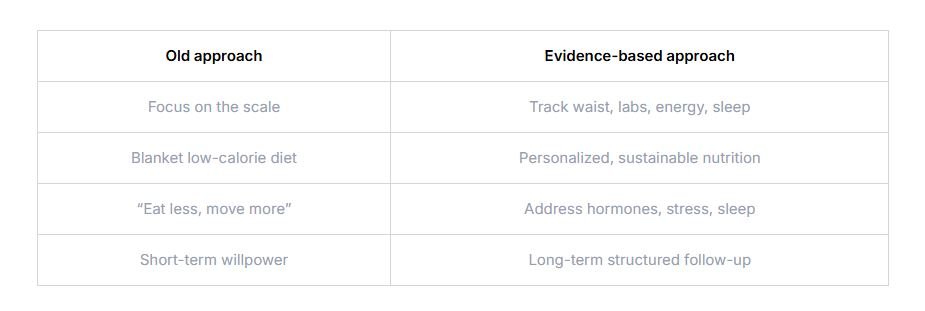
What does evidence-based management actually look like?
It looks unglamorous. No detox teas. No 21-day miracles. Just consistent, measured intervention that respects how the body works.
Here is the shift most patients need to hear. Obesity is a chronic, relapsing condition, recognized as such by the World Health Organization. You would not tell a hypertensive patient to “just try harder.” Same logic applies here.
For deeper reading, the WHO obesity fact sheet and guidance from the American Diabetes Association remain solid references.
The 7-step framework I use in clinic
This is the practical spine of my approach, refined after the certification.
- Assess honestly. Waist circumference, HbA1c, fasting insulin, lipid profile, and a real conversation about daily life.
- Set one anchor goal. Not ten. One meaningful, measurable target for the next six weeks.
- Rebuild nutrition. Protein-forward, fiber-rich, culturally familiar meals. Food you will actually eat.
- Add movement that survives Monday. A walk you enjoy beats a gym plan you abandon.
- Fix sleep and stress. Poor sleep sabotages blood sugar. This step is criminally underrated.
- Use medication when indicated. Modern metabolic medicine has real tools. Prescribed carefully, they help.
- Review, adjust, repeat. Every 4 to 6 weeks. Small corrections, sustained.
A real patient case (with numbers)
A 46-year-old teacher came in with an HbA1c of 7.9%, weight 92 kg, and that familiar exhaustion. She had “tried everything.”
We skipped the drama. Protein at breakfast, a 25-minute evening walk, an earlier bedtime, and one targeted medication. No starvation. Over 20 weeks her HbA1c dropped to 6.4%, weight to 84 kg, and her waist shrank by 9 cm. She slept through the night for the first time in years.
Eight kilograms, yes. But this time they stayed off. The difference was structure, not suffering.
Common mistakes that stall progress
- Chasing the scale while ignoring waist and labs.
- Cutting calories so hard the body fights back.
- Treating sleep as optional.
- Quitting at week three because results feel slow.
Metabolic change is a slow tide, not a switch. Patience is a clinical tool.
Frequently Asked Questions
Ready for a plan built around you?
If you are tired of losing the same kilograms over and over, let us build something that actually holds. Book a metabolic health review and start an evidence-based, patient-centered plan.